Local News
Provinces remove interprovincial trade barriers; B.C. led initiative

A number of Canadian provinces have agreed on a B.C.-chaired initiative to drop interprovincial trade barriers across the country.
The Canadian Mutual Recognition Agreement (CMRA) aims to make it easier for businesses to sell products across Canada.
Among other changes, different provincial requirements to offer new products will be streamlined into one country-wide legislation.
These mutual recognitions of regulations and approvals are predicted to increase Canada’s GDP by more than 7 per cent, according to a B.C. government economic analysis.
The CMRA takes effect in December this year and includes goods such as health technologies, clothing, toys, industrial products, tires, and vehicles.
It will, however, exempt food, alcohol, and financial services.
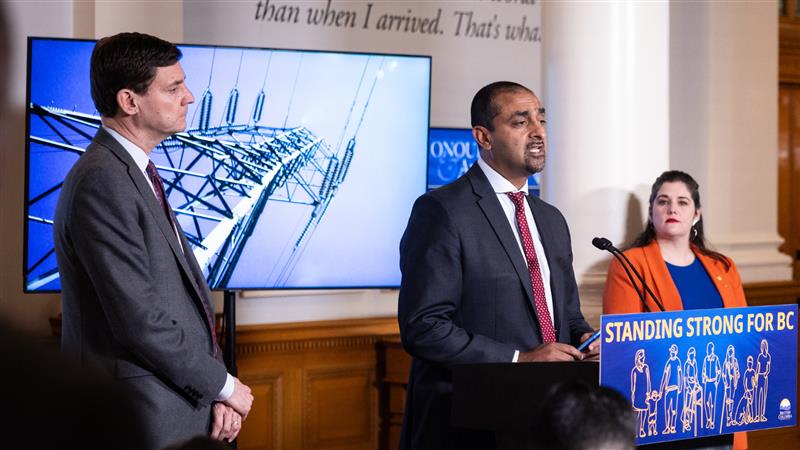
Ravi Kahlon, B.C.’s Jobs and Economic Growth Minister, hopes to extend the agreement to other goods and services, such as financial services.
“We’re committed to continuing to work with our partners to support the free movement of labour, alcohol, financial and other services to make it easier to trade within our borders, and reduce our dependence on the United States,” he said to reporters in Victoria.
Part of B.C.’s ‘Look West’ strategy
“This is the largest set of red tape reduction in Canada’s history, and it’s just the beginning.”
As part of the agreement, the provinces also signed memorandums to increase labour mobility across the country.
The province says the now signed initiative is part of B.C.’s “Look West” strategy, a recently launched plan to attract private investment in order to fast-track nation-building projects.
“By embracing mutual recognition, we are building one unified Canadian market with smart, modern rules that let goods move freely,” said Bridgitte Anderson, president and CEO, Greater Vancouver Board of Trade.
By establishing new domestic markets, the initiative is also in response to tariffs imposed by the U.S.
“This is part of our work to build an economy that’s less reliant on the United States and works better for all Canadians,” B.C. Premier David said in a written statement.
Additionally, the provincial government announced it had agreed with the Yukon to explore connecting electrical grids.