
Canada
Arab Canadians deepen connection with their heritage on World Arabic Language Day

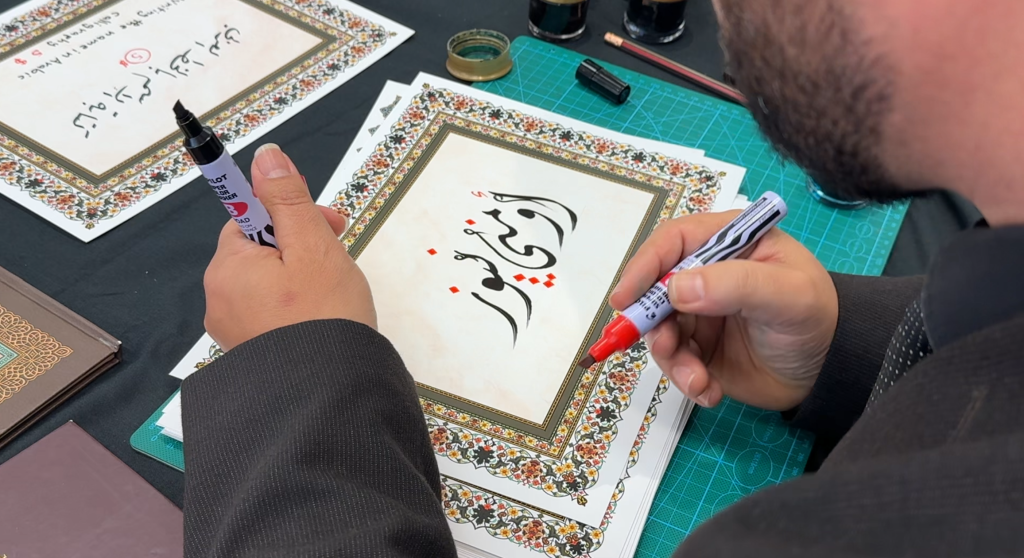
December 18 marked World Arabic Language Day, and Arab Canadians took the opportunity to share with OMNI News the importance of keeping the language alive through different activities in the diaspora.
Arab parents are sending their children to schools like Waterdown Islamic School in Hamilton, Ont., where they are taught Arabic daily, not just once or twice a week. Just like other languages, learning Arabic at a young age is key to better practice in the future.
“As a mother I think it is important for children to learn several languages; it opens many doors to them, so the more the better,” said Leileh Zaidi, a teacher at the school.
Another school in Vancouver focuses on teaching dialects especially to the younger generation. My Roots Arabic School provides a bridge between Classical and spoken Arabic, and spoken Arabic has at least 22 dialects.
“Our classes all focus on Classical Arabic but at the same time we have different dialects, so we can preserve the roots of our children. We have Syrian and Lebanese and Egyptian dialects,” said Maha Nagi, manager of My Roots Arabic School.
In addition to formal learning settings, members of the Arab community have taken it upon themselves to pursue individual initiatives.
Hiba Kalakehce has created books with emphasis on dialect as well to help children learn early how to better connect with their Arab environment.
She said that each book comes with a reference to newly learned words.
“As a speech specialist I make sure each story has a phrase for kids to learn. We take the basic words out of each book and attach them as a document to create something similar to a dictionary.”
Another form of incentivizing young Arabs to learn the language is to organize gatherings and events where practice is rewarded with prizes and recreation.
“Parents are very keen to teach their children Arabic, but the issue is in application. One lesson (a week) is not enough to learn. Practice at home and the community is almost non-existent. Parents speak French and English with their children at home, and this deprives them of the opportunity to practice,” said Imad Hallak, founder of “Salsabil Al Dhad” project.
Learning Arabic in the diaspora is also not limited to children.
The war in Gaza has inspired Nael Abu Jazzar to relearn Arabic at the age of 35. He said he missed that opportunity when he was a child because teachers told his parents that he only needed English to succeed.
“The Arabic language is not easy. It’s one of the hardest languages for English speakers to learn. So, I just accepted that until the conflict that’s happening in Palestine really started to reach such a horrible stage of where it is today. It’s what motivated me to learn more.”
A different way to celebrate Arabic is its unique calligraphy, a historical form of art distinguished by its immense fluidity.
Yasser Watad said he is building a career in Canada introducing this art to Arabs and non-Arabs alike, telling OMNI News that non-Arabic speakers convey their captivation by the beauty of Arabic words and letters.
“Pablo Picasso said, ‘When he first saw Arabic calligraphy, I think I entered abstract art from its widest doors. I realized that Muslim artists are 50 years ahead of me in abstract art’,” Watad said an interview in Montreal.
Another form of calligraphy art is having words engraved on metals like copper. Quoting the Quran or common Arab proverbs is widely applied in Arabic calligraphy, and engraving is no exception. The shine from metals adds more radiance to finished pieces.
“There are a hundred ways to draw a letter which gives the calligrapher the room to be creative (..) Arabic calligraphy didn’t exist by chance, it went through many stages, and the Arabic language very rich like no other,” said calligraphy engraver Hamid Royed.
Arabic is written right to left, has a three-letter root system which the words stem from, there are no capital letters, and is used daily by more than 400 million people, adding yet more to its fascination.
Established by the United Nations Educational Scientific and Cultural Organization (UNESCO), World Arabic Language Day is celebrated every year on December 18 since 2012.
The date coincides with the day in 1973 that the General Assembly of the United Nations adopted Arabic as the sixth official language of the Organization, the UN website reads.
With files from Radia Tidafi, Amany Mohanna, Charles Abdulaziz, Noelle Haggear, Tala AbouDabousa and Hiba Alzubaidi