Local News
BCGEU reaches tentative agreement with provincial government

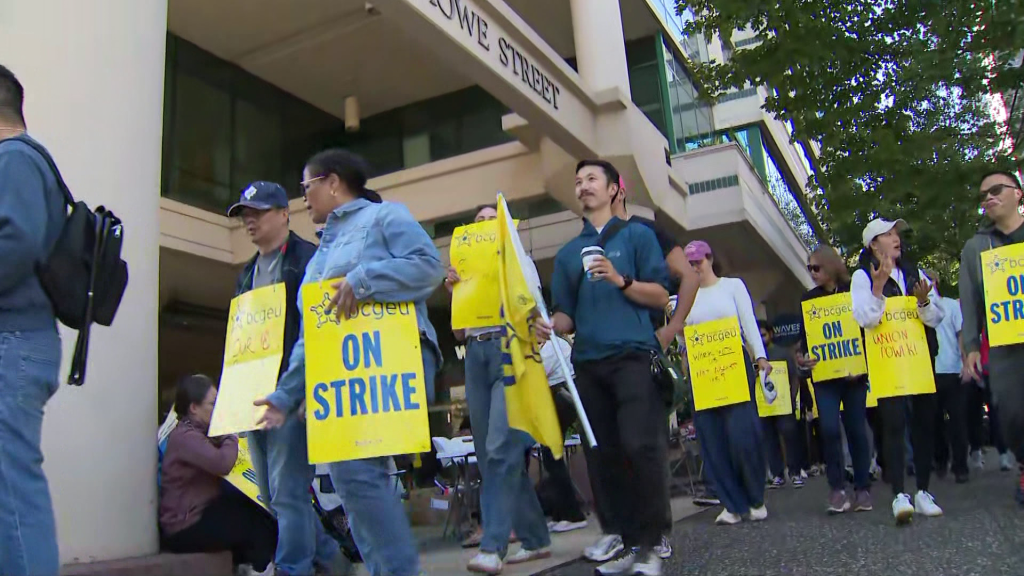
The BC General Employees’ Union (BCGEU) has reached a tentative agreement with the provincial government after eight weeks of job action.
The union’s 34,000 members now have the opportunity to review and vote on the four-year-deal.
“This tentative agreement is the result of the incredible strength and solidarity of BCGEU and PEA [Public Employees Union] members across the province,” said union president Paul Finch.
“For eight weeks, they held the line — standing up for themselves, their families, and the public services that make life in B.C. possible. This deal shows that when workers stand together, we can make real progress.”
Mediators Vince Ready and Amanda Rogers led the negotiations with the provincial government.
The terms of the agreement include a general wage increase of three per cent per year for four years, targeted pay adjustments for lower-paid workers, and a range of non-monetary benefits around job protections, telework, the grievance process, and vision and counselling benefits.
Finch says the deal is a good first step and will help retain experienced workers while addressing the “gap” between workers’ pay and rising living costs.
He tells 1130 NewsRadio that members of the union are pleased with the tentative agreement.
“I think it’s a fair deal and one that meets the priorities our members identified for us in bargaining,” he said.
It didn’t come easily, however.
“Mediation was a slog. It was a very difficult process but ably navigated by Vince Ready and Amanda Rogers, and fundamentally by our membership,” he said.
“We hadn’t really had real bargaining up until mediation, so there was a lot of stuff to get through.”
The union says members of the PEA are still on strike.
“BCGEU members will continue to respect PEA picket lines in solidarity with those workers, who have yet to reach a fair deal with government,” the BCGEU said.
“Until members hear otherwise, all picket lines will remain up. The bargaining committee will be providing further information to members soon.”
Negotiations for a new collective agreement for the BCGEU began Jan. 22, with the current deal expiring at the end of March. The BCGEU issued 72-hour strike notice on Aug. 29. Workers walked off the job Sept. 2 after 92.7 per cent of BCGEU members voted in support of strike action.
At the time, Finch said members were facing an affordability crisis and warned skilled workers will be lost if wages don’t keep up with inflation.
Union members work across 20 ministries, Crown corporations, and agencies.
Hard work begins now for hospitality sector
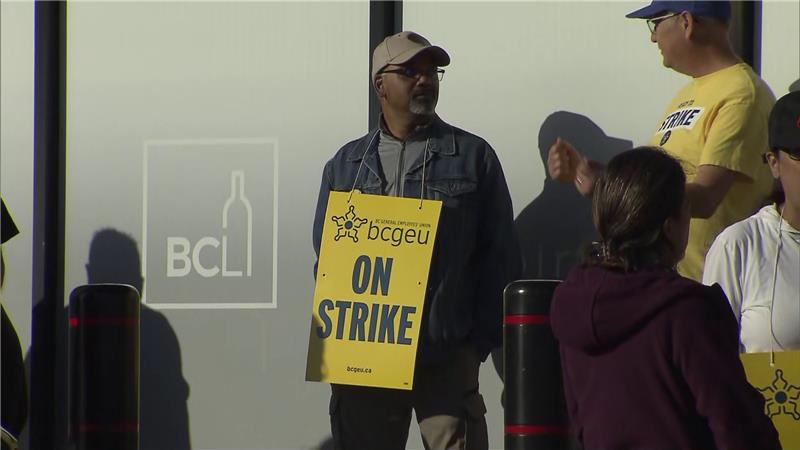
All government liquor and cannabis stores, warehouses, and headquarters have been shut down for the duration of the strike, cutting off supplies for private cannabis and liquor operations.
This means that while many industries have struggled during the job action, those in the province’s hospitality, wine, beer, and liquor sectors have been hit particularly hard.
Earlier this month, six major hospitality organizations issued a joint statement saying its industry was on the “brink of collapse” because the strike has cut off access to liquor products.
Ian Tostenson, president of the B.C. Restaurant and Foodservices Association, says the strike has brought the hospitality sector to its knees.
“Based on their surveys, where it was headed, we probably lost maybe 10 to 15 per cent in revenue over this,” he said Sunday.
“There have been some layoffs, really more in the supply side of the industry.”
Now he says the end of the strike means great news for the industry, but the hard work begins now.
“After just a bit more than eight weeks, we are going to need a miraculous effort here to resupply the market,” he said.
“We are are estimating that there’s going to be, when work resumes, 8,000 to 9,000 orders from across B.C. that goes to the Liquor Distribution Branch to fill orders, and we estimate that that’s 600,000 to 700,000 cases of product that have to be moved.”
Earlier this month, he said the last time the union went on strike, it only lasted for two and a half weeks but it took three months to restore the system.
“We have submitted a plan to government on behalf of the industry that [would resupply] this market in weeks, not months. Last time it took months.”
He says one of their goals is avoiding shortages heading into the busy holiday season.
‘A positive and a negative’
Jayden Alexander at 1st Avenue Liquor Store says he feels optimistic about receiving stock on time, and he points out that the effects of the strike weren’t all bad.
“The strike was a positive and a negative for our store, because with the [BC Liquor Stores] closing, we were able to make quite a bit of profit during this time,” he said.
“But it is nice with the fact that we will have our regulars come back for the stuff that they need.”
While Alexander says he is anticipating a delay as far as liquor coming back into stores, he believes it will only take a couple weeks before everything gets back to normal.
Impacts have been far-reaching
The Canadian Federation of Independent Business says the strike has led to weakened confidence by small businesses in the province.
The strike also included workers in areas such as drivers licensing and student loans.
The B.C. government issued a bulletin earlier this month saying it was taking steps to ensure those on disability and income assistance would get their cheques, but many residents reported extensive delays.
In a statement to 1130 NewsRadio, BC Minister of Finance Brenda Bailey said, “I am pleased to see a tentative agreement has been reached between the BC Public Service Agency and the BC General Employees’ Union. Our government respects the ratification process and the rights of union members to vote on their agreements, so I’ll leave any further comment until that process is complete.”
Meanwhile, Finch says he is grateful for the patience and support the union has received.
“We are keen to get back to work and serve British Columbians.”
With files from The Canadian Press and Charles Brockman.