
Canada
Experts say Canada should co-ordinate Western Hemisphere response to Maduro’s ouster

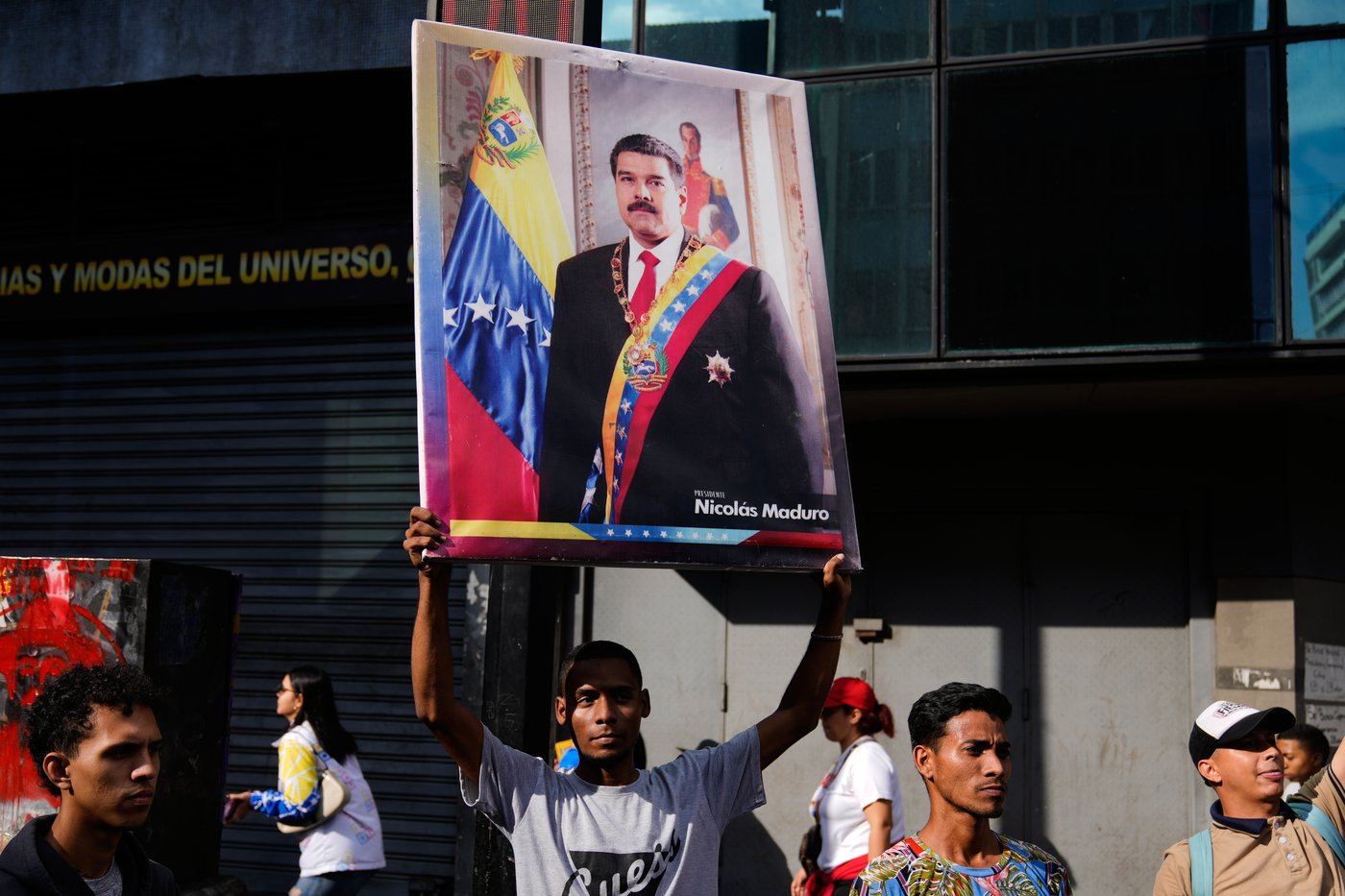
OTTAWA — Foreign policy experts say Ottawa should reach out to nations threatened by the United States to co-ordinate a response to the Trump administration’s ouster of Venezuela’s autocratic ruler
“We’re a long way from a democratic transition here. This actually looks in many ways more like a presidential coup,” said Max Cameron, a University of British Columbia professor who is president of the global Latin American Studies Association.
“If this current government doesn’t want to issue press releases that are directly critical of the United States, at least behind the scenes (it can) put together the doctrinal basis for Canadian liberal internationalism that is counter to American aggressive unilateralism.”
The U.S. shocked the world this weekend when it captured Venezuelan President Nicolas Maduro in a military raid that followed months of airstrikes on Venezuelan boats Washington said were smuggling drugs.
The move came after Washington deployed a new national security strategy that called for the U.S. to exert much more control over North and South America.
Canada and other democracies called on Maduro to resign after a 2018 election that was almost universally seen as stolen, and after years of human rights abuses and economic mismanagement.
But the unilateral ouster of a sitting head of state has other nations worried that the U.S. will return to a historical pattern of intervention throughout Latin America.
Cameron said Ottawa should be reaching out to other countries Washington has threatened to invade or purchase — such as Mexico, Panama, Cuba and the Danish territory of Greenland — and to regional heavyweights like Brazil to set out a strategy for preserving national sovereignty.
“Much of Latin America welcomes our presence,” he said.
“I would say go to Mexico City, go to Brasilia, sit down with their diplomats and work out a pact that spells out how the rest of the world, particularly in the Western Hemisphere, is going to deal with” a more aggressive U.S., he added.
So far, Prime Minister Mark Carney and Foreign Affairs Minister Anita Anand have said in media statements they are monitoring the situation and reaching out to partners. Carney also has spoken with Venezuelan opposition leader Maria Corina Machado.
Both said they support the right of the Venezuelan people to democracy and called on “all parties to respect international law” — with no mention of the U.S.
Carney is in Paris this week for a meeting of the Coalition of the Willing, a group crafting security guarantees for Ukraine. It’s expected the group of mostly European leaders will discuss the situation in Venezuela and its impact on global politics. On Carney’s planned itinerary in Paris is a Tuesday meeting with Danish Prime Minister Mette Frederiksen, who has pushed back with increasing force on the idea of Washington taking over Greenland.
David Carment, a professor of international affairs at Carleton University, said these statements lack “any actionable policy” for Ottawa and they don’t seem to acknowledge the chaos and violence that can follow a sudden coup.
“It doesn’t really speak to any actionable policy that Canada can follow through with,” he said. “It does leave Canadians wondering exactly what it is that we intend to do, more importantly, and whether or not we will take issue with the U.S. approach to removing Maduro from power.”
Carment said Ottawa should instead say that it’s seeking clarity from Washington on its next steps in Venezuela and on its plans for countries in the region “vulnerable” to American intervention.
“This is a time for leaders to demonstrate some independent resolve, not necessarily annoying Americans but actually finding out in what capacity Canada can influence the situation,” he said.
“Should we have reached out to regional partners who may feel equally threatened? I think that would be an important, positive message to demonstrate we have diplomatic influence and carry some weight.”
Carment said Canada has lacked a diplomatic presence inside Venezuela since 2019 and Ottawa “has opted out of engaging in hard-nosed diplomacy with countries we don’t get along with,” such as Iran.
Cameron said Ottawa has still contributed to democratic movements in Venezuela over the years and can step up that work to stabilize the country and the broader region.
Canada was part of the Lima Group, a group of countries that tried to mount a peaceful takeover of Maduro’s regime by empowering the opposition that was widely seen as having won the 2018 election. Canada hosted the group for meetings and used to co-ordinate with democratic activists in Venezuela.
Cameron said that kind of work goes against Canada’s habit of ignoring its own backyard.
“We treat Latin America as if it only matters when our mining companies are there, or banks are there.”
This report by The Canadian Press was first published Jan. 5, 2026.
Dylan Robertson, The Canadian Press