Local News
financial planning expert returns with a new edition of his signature work

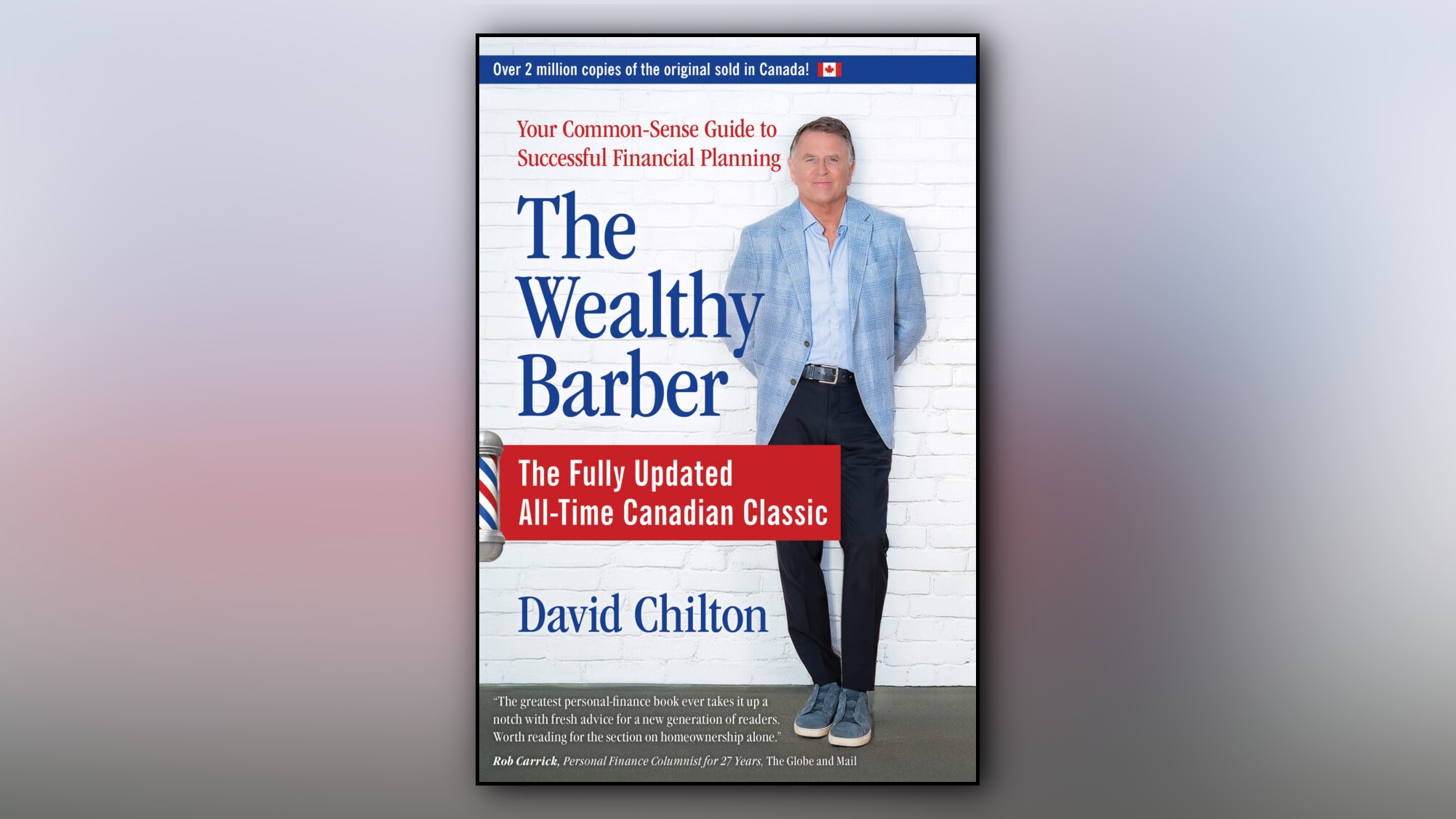
David Chilton was just 27 years old when the original edition of The Wealthy Barber was first published back in 1989. It would go on to sell more than two million copies, making him a go-to expert on financial planning and eventually a panelist on TV’s Dragon’s Den. Now, more than 35 years later, he’s back with The Wealthy Barber: The Fully Updated All-Time Canadian Classic, a revised edition of his signature work dedicated to a new generation of investors.
“Every time I hear somebody talk about how long ago that was, I just shake my head,” Chilton said.
“When the new book came out, a couple of people said, ‘I’m kind of surprised you’re still alive,’ because they thought I was in my 50s when I wrote the original. It’s all gone by so quickly, but I’m thrilled to have the new book out.”
Chilton admits The Wealthy Barber was almost The Wealthy Bartender.
“I actually got the idea — and people think I’m kidding, but I’m dead serious — I got the idea watching Cheers, the old television show. And I thought, ‘You know what? I’ll set it in the bar, and I’ll use the humour, I’ll use the stories, I’ll use the conversation.’ And then, of course, alcohol got in the way of it being effective because I wanted it to resonate as true, and therefore, I moved it over to the barbershop.”
The world has changed quite a bit since The Wealthy Barber was first published. For instance, there was no Bitcoin, there was barely even an internet! But Chilton says the real reason he updated the book was to help younger Canadians navigate an unprecedented affordability crisis.
“The cost of living is so much higher relative to incomes than it was. It is more difficult now. The boomers don’t want to see it that way, but trust me, it is. When you do the simple arithmetic on it, especially for, I’d say, the lower 60 per cent in income, making ends meet, getting through all of this, is very difficult.”
‘Tis the season for New Year’s resolutions and, for many of us, that includes tuning up our finances. Chilton says one of the first things you can do is keep a spending summary.
“You chronicle all your spending on a two- or three-month period, categorize it, and learn where the money is going. You’ll quickly see where the leaks are, where you can save some money, but more importantly, you’ll also see where you’re spending inefficiently.”
He says a spending summary is different than a budget and doesn’t include shelter costs and other non-discretionary spending.
“But there’s a lot of money we do get to choose where we spend,” he said.
“Everybody who does one of these things, and they are kind of boring to do, but everybody who does one reports big pluses from going through the exercise.”
The Wealthy Barber is just as folksy, chatty, and relatable as it ever was. But this time it addresses new investment vehicles like the first home savings (FHSA) and tax-free savings accounts (TFSA), advances that weren’t around in 1989.
While much has changed since the original book was published, Chilton says many of its core principles remain the same. One of those principles is what he calls the three most important words in personal finance: pay yourself first. It arguably remains his most revolutionary piece of advice.
“It’s interesting. When The Wealthy Barber first came out, I didn’t know that that would become the item that would make such a difference. I knew it was the key because budgeting doesn’t work. I got the idea from helping so many younger people to budget when I was an investment counsellor and seeing that they couldn’t stick to it and that the savings would never materialize,” he said.
“And I thought, we’ve got to start taking it off the top of the paycheck directly out of the bank account before we have an opportunity to blow it, before human nature gets involved. I didn’t know it was going to go on to become what it did in terms of the way it was going to resonate and be grabbed ahold of by people.”
“By the way, 36 years later, after probably seeing more personal financial plans than anybody ever has, as dramatic as that sounds, pay yourself first may be even more important than I said it was, because you clearly see the people who saved effectively, 90 per cent of them have used that strategy. That’s been the lead approach for the people who truly set aside the appropriate amount of money. So, pay yourself first is absolutely imperative.”
It’s that kind of timeless advice that has made The Wealthy Barber a Canadian classic.
“It’s conventional wisdom but repackaged in a way that makes it more accessible, more understandable, that pulls people in in a more effective manner. And I think that’s why the book has done so well over the years.”
“None of it’s overwhelmingly complicated. It’s relatively straightforward stuff. You must understand some subtleties and some nuances. But I think the book presents them in a way that makes it more enjoyable.”
“I hope, if nothing else, the book gets people thinking,” he said.
The Wealthy Barber: The Fully Updated All-Time Canadian Classic is available from the Financial Awareness Corporation.