Local News
Killer of Lapu Lapu suspect’s brother calls festival attack a ‘ripple effect’

Content warning: The following story deals with the subject of suicide. If you or a loved one is at risk of self-harm, call Crisis Centre BC at 988. Translation services are available.
The murderer of a man whose brother was later arrested for the Lapu Lapu festival attack that killed 11 people in Vancouver last April has called it a “ripple effect” from his own crime 15 months earlier.
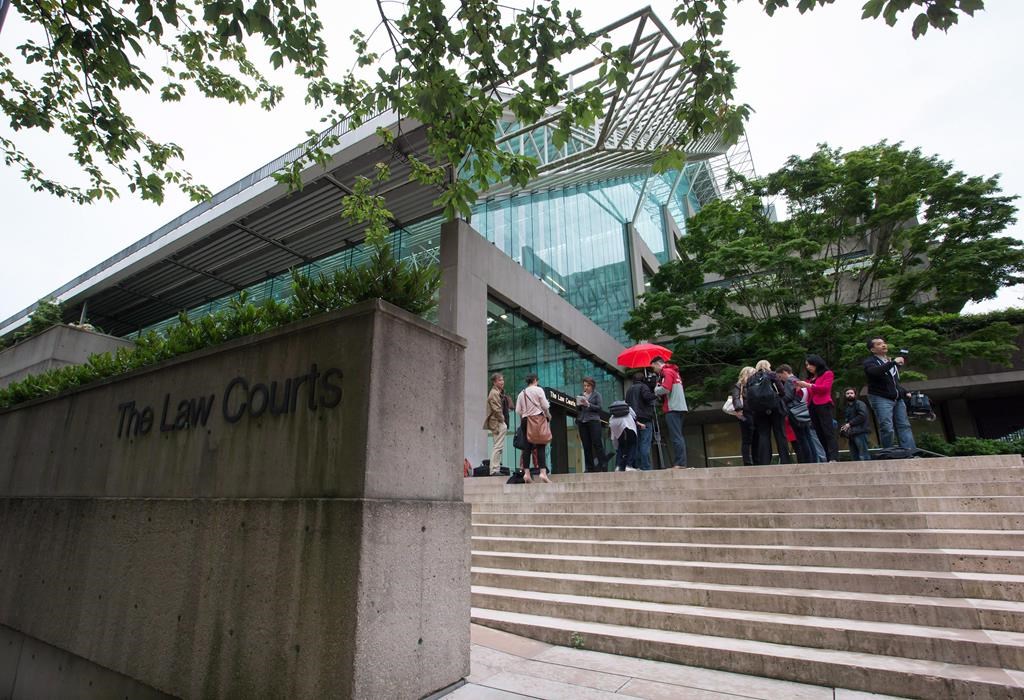
Dwight Kematch, who pleaded guilty to second-degree murder in the January 2024 killing of Alexander Lo in July, told his British Columbia Supreme Court sentencing hearing that what followed was a “horrendous tragedy.”
“I deeply apologize for what I’ve done,” he told the court Friday, before Justice F. Matthew Kirchner handed him a sentence of life imprisonment with no eligibility to apply for parole for 13 years.
The hearing in Vancouver was attended by video by Kai-Ji Adam Lo, who is charged with 11 counts of murder and 31 charges of attempted murder over the festival attack, in which an SUV was driven through a crowded street.
Kematch, who stabbed Alexander Lo to death after meeting him via the gay dating app Grindr, said he stole his victim from his family, calling Kai-Ji Adam Lo a “caring brother.”
“I understand the causal effect about what later transpired. It was a horrendous tragedy and was a ripple effect from what I did,” he said.
Kai-Ji Adam Lo did not speak at Friday’s hearing but Crown prosecutor Mark Mhyre read out his mother’s victim impact statement.
Lisa Lo described how she had raised her sons as a single mother and how her son’s death had caused “severe physical and emotional trauma.”
“Because I could not accept Alex’s sudden death and missed him too much, I attempted suicide,” she said in the statement, before describing how her younger son, Kai-Ji Adam Lo, found her unconscious.
The statement said that resulted in a two-week coma.
“My other son stayed by my side in the hospital day and night,” her statement said.
It said she was later diagnosed with depression, has been unable to work and is “almost incapable” of taking care of herself.
“Because I’ve cried so much, my vision is now blurred, and the corners of my eyes often bleed,” her statement said.
“Because of the offender’s actions, our family has been plunged into endless sorrow. I can’t forget my son, and I don’t want this tragedy to happen to any other family.”
Both Crown and defence lawyers agreed a fair sentence would be life without parole eligibility for 13 years. The clock on the sentence begins at the time of arrest in 2024.
Kematch’s prior offences, dating back to 2004, include theft over $5,000, two convictions of killing an animal for beheading two cats, and arson for which he was handed a 2 1/2 year jail sentence.
In his submissions, Mhyre also cited other materials supplied to the court, including an email from Kematch to his uncle in 2004 in which he expressed fantasies of killing someone, as well as Google searches from January 2024 that suggested an “ongoing fascination with mass murder, a search for the Parkland shooting, other references to killing (and) serial killers.”
Mhyre called him a “clearly dangerous man,” but noted he had gone 20 years without committing a criminal offence and had “not been dealt an even hand” in life.
He said Kematch’s life was the “product of colonial policies that have affected so many Indigenous people.” That, the court heard, included parents who suffered addictions, being placed in foster care and suffering verbal, physical and sexual abuse.
“We will recognize the brutality of what he did and his dangerousness, but it also recognizes that he’s not irredeemable, and it allows the parole or if he can be honest and make progress, the discretion to deal with him appropriately in roughly 11 years from now,” Mhyre told the judge Friday.
Kematch’s lawyer, Jim Heller, said he had worked with the Crown on sentencing submissions and agreed it was a “very fair and reasonable proposal.”
“He’s very remorseful for this offence,” Heller said. “He sees his guilty plea and the sentencing here as being just an important part of his rehabilitation.”
Kirchner, the judge, called the circumstances of the case “truly horrifying.”
He ordered a lifetime ban on firearms and prohibited weapons, authorized sampling of Kematch’s DNA and issued a no-contact order for Lisa Lo, as well as Kematch’s sister and brother-in-law.
Kirchner said Kematch’s guilty plea suggested remorse and pointed to the conclusion of Kematch’s statement to the court that he hoped Lo would be remembered for the person he was, not the way he died.
Such factors, Kirchner said, showed “real elements of humanity and hope for rehabilitation.”
Alexander Lo’s friend Richard Hesketh said in a victim impact statement Friday that Lo was “full of energy and lit up a room.” Hesketh said Lo had been “into art and fashion” and told the court how he would often click his tongue as an audible wink.
“His smile was contagious, and he valued his friends greatly. He was kind, fun, meek, and spending time with him was special.”
He told the court the impact of Lo’s death was “catastrophic.”
“When you murdered Alex, you took away from so many others someone who was this one-of-a-kind burst of energy that was energetic, enthusiastic, uplifting, fun, and friendly,” he said, addressing Kematch directly.
Hesketh told the court the crime has far-reaching impacts for the gay community, adding he had not used Grindr since he learned of the murder.
“The trauma associated with this action is too much for me to go back to literally the start of the crime,” he said.
A trial date for Kai-Ji Adam Lo has not been set, but his next court appearance is scheduled for Feb. 11.
This report by The Canadian Press was first published Jan. 16, 2026.