Local News
Richmond ordered to take down high-tech traffic cameras after privacy ruling

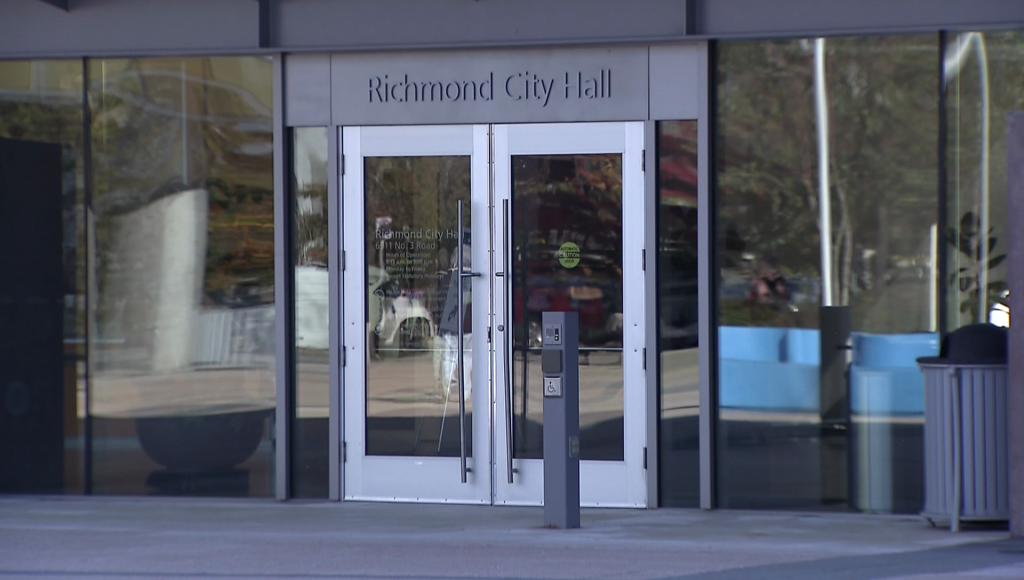
The City of Richmond is being ordered to take down its new traffic surveillance cameras at the intersection of Granville Avenue and Minoru Boulevard, delete all recorded footage, and stop collecting personal information.
It comes after B.C.’s privacy watchdog ruled the program violated provincial law.
The order was issued by the Office of the Information and Privacy Commissioner, which found the city did not have the legal authority to operate the high-resolution cameras for law-enforcement purposes.
“The city doesn’t have that authority, criminal law enforcement is the job of the police,” said Michael Harvey, B.C.’s Information and Privacy Commissioner.
“Any public body can only collect personal information if they are authorized to do so by the law.”
The cameras were to be installed at major intersections as part of a $2.5 million pilot project approved by Richmond city council in 2024.
The program aimed to support police by capturing video using ultra-high-definition technology capable of recording faces, licence plates, and vehicle identifiers.
Harvey says the city must shut down the project and provide proof of compliance by Feb. 26.
This follows the commissioner making a similar request last year, in which Harvey says the city responded in November indicating it did not intend to comply and expected a formal order to be issued.
The investigation also found Richmond failed to provide adequate notice to the public about the purpose and authority behind the data collection, noting signage at intersections was insufficient.
According to the order, Richmond’s pilot program involved multiple high-resolution cameras operating around the clock.
“Nobody knew what it was being used for or who was surveilling the tapes,” said Michael Wolfe, a Richmond city councillor who opposed the program from the outset.
Wolfe tells The Leader Spirit there has also been no public data demonstrating the program’s effectiveness.
“There’s been nothing to show.”
Wolfe also raised concerns about broader privacy implications tied to advanced surveillance technology.
Harvey says his office has recommended the province explicitly regulate biometric surveillance technologies, such as systems capable of facial recognition, voice analysis, and gait recognition.
Despite the ruling, Richmond Mayor Malcolm Brodie remains committed to the cameras, and says he’ll seek council’s approval to appeal the decision in court.
“Where does the danger lie?” Brodie said. “After all, you’re in a public place. You’re in the middle of an intersection.
While understanding the concerns, Brodie still sees great potential in the cameras and stresses they are only intended to strengthen public safety and assist law enforcement.
The City of Richmond must either comply with the order or seek a judicial review.
— With files from Kurt Black