Local News
Toronto to consider making AED access mandatory in high-rises

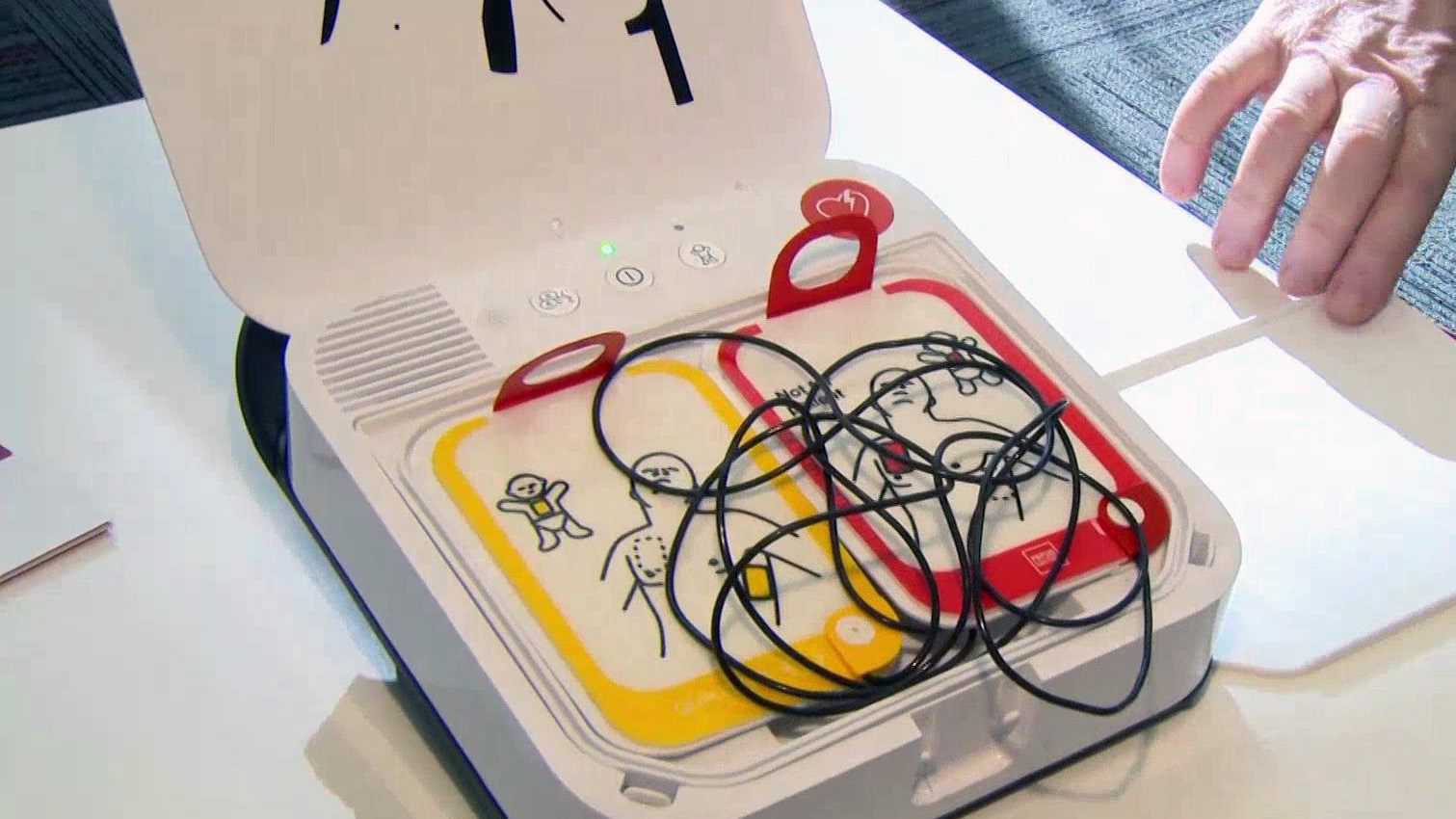
They are easy-to-use devices that anyone can operate, and they have been proven to save lives. Automated External Defibrillators (AEDs) are typically located in public places such as schools, malls, and subway stations.
The use of an AED along with CPR within the first few minutes of cardiac arrest can more than double a person’s chances of survival.
“So if someone collapses, you’re going to call 911, you’re going to get the AED, start CPR and put that machine on. And that machine will shock someone in a certain type of rhythm, and it can resuscitate them after a sudden cardiac arrest,” explains Roberta Scott with AED Foundation Ontario.
But where AEDs are noticeably lacking is in Toronto’s many high-rise buildings, and experts say that’s a serious concern. According to a 2016 study published in the Canadian Medical Association Journal, the survival rate for those living below the third floor is about 4.2 per cent. For the third floor and above, it’s 2.6 per cent. Above the 16th floor, it drops to just 0.9 per cent. There are normally no survivors above the 25th floor.
“So much of our population is living in these high-rise buildings, and as you go higher up, the chances of survival decreas,e unfortunately,” said Dr. Lesley James, the director of health policy and systems with the Heart and Stroke Foundation of Ontario.
Long travel times, locked lobbies, and elevator wait times were among the issues that contributed to the steep decline.
“Our response times in Toronto as paramedics are about eight minutes roughly. So when you think of us getting there and getting up to a high floor in a high-rise, that’s delaying the time to patient care,” said Scott.
Toronto’s Planning and Housing Committee has voted in favour of looking into whether the city can make it mandatory to have AEDs on-site in high-rises. Right now in residential buildings, it’s typically up to the landlord or condo board to decide whether to have the kits, which can cost up to $2,200 each.
“It’s really important that bystanders, people living in these high-rise buildings, know where the nearest AED is, it’s accessible, it’s not blocked up somewhere or in the lobby of a building, 25 floors down,” said Dr. James.
Ontario currently mandates the kits to be at construction sites. Toronto city staff will now conduct an assessment with a report due in the summer of 2026.
The AED Foundation of Ontario is also working on a provincial registry that would allow 911 dispatch to know where AEDs are located to inform the caller or bystander. That is set to come into effect in 2026.