Local News
What the restaurant industry is cooking up for 2026 to help boost profits

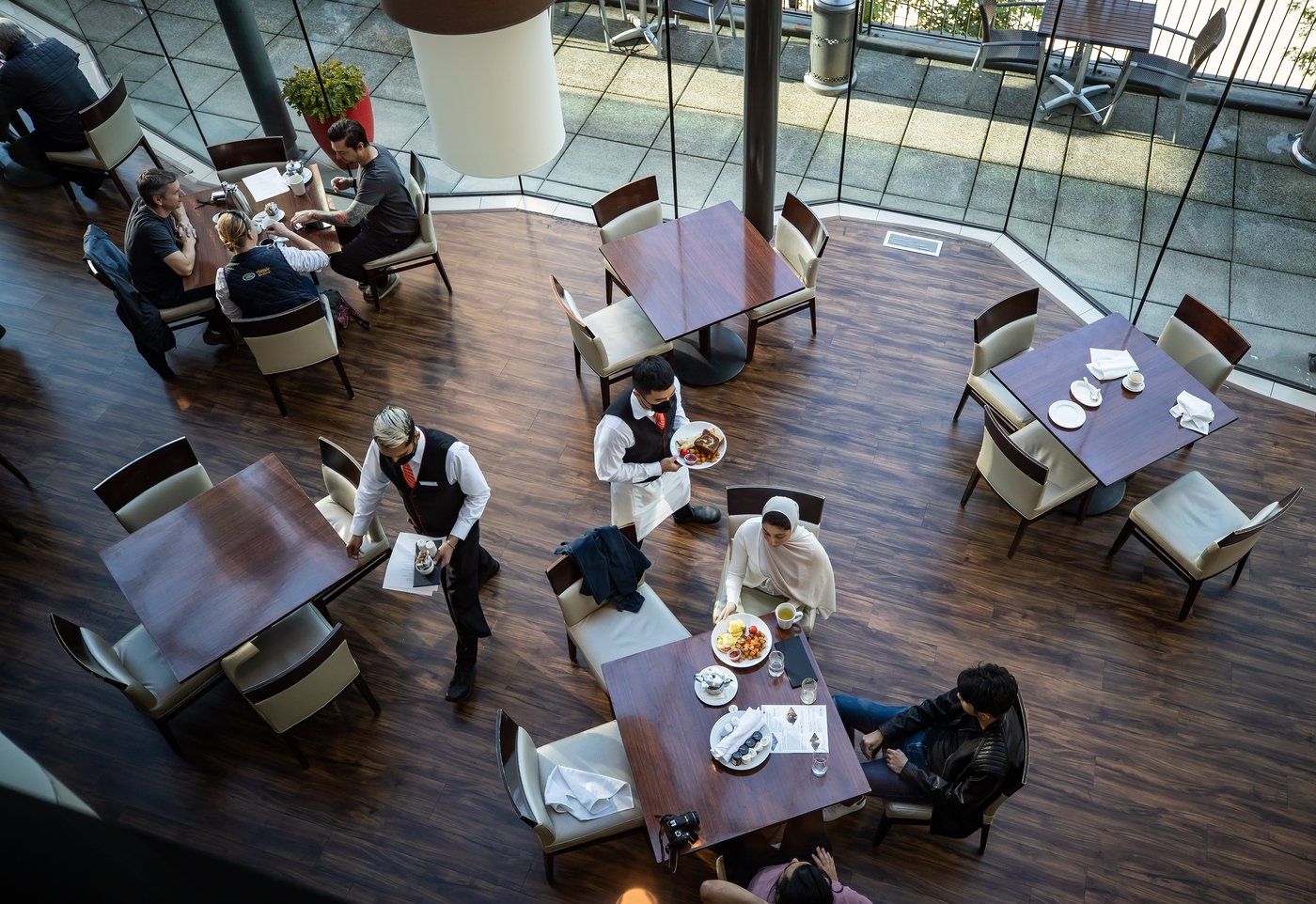
Amid a shaky economy, the country’s restaurant sector is not hiding the fact that it faces numerous challenges in turning a profit.
Mark von Schellwitz, vice-president for Western Canada at Restaurants Canada, tells 1130 NewsRadio that at the beginning of the year, sales were better-than-expected as the industry benefitted from a federal tax holiday rolled out by former Prime Minister Justin Trudeau.
Last December, Trudeau announced a nationwide levy break on several items, including food at both restaurants and the grocery store.
“It really helped us in January and February which are usually the most difficult for restaurateurs,” von Schellwitz said. “However, we still have double-digit increases in operating costs — everything from food costs going up, insurance, lease costs, so that’s certainly still a big challenge.”
He adds those expenses are compounded with the ongoing cost-of-living crisis in B.C., which is a factor in people dining out less than before.
“Our industry really thrives when people have disposable income… on a per capita basis. We’re still nowhere near the sales levels we were at in 2019, before the [COVID-19] pandemic, so we’re still struggling as an industry to get back to pre-pandemic levels of profitability.”
“Seventy per cent of our members are very concerned about the business climate going forward.”
Von Schellwitz points out that in 2024, 52 per cent of restaurants were not turning a profit, but that dropped to 41 per cent this year.
“But that’s still four out of 10 restaurants that are still struggling to make any profits.”
One trend he hopes doesn’t continue into 2026 is a noted drop in spending on liquor.
“For a lot of full-service restaurants, liquor is one of the big profit centres and, of course, that was made a lot worse with the BCGEU strike, which didn’t allow our members to order any liquor products for two months, and it cost the industry about $250 million in lost liquor sales.”
Von Schellewitz says businesses also had to deal with tariffs imposed by the U.S. in a trade war that shows no signs of ending soon.
“Right now, where the industry is at, we’ve got about 30 per cent of our industry right now that’s more optimistic for 2026, but still 70 per cent of our members are very concerned about the business climate going forward.”
Von Schellewitz says restaurants are also facing a labour shortage.
“We’re still in a situation where, in certain areas in B.C., we don’t have any young people coming into the marketplace to take jobs we need, and that can lead to managerial and operator burnout. Even in the Lower Mainland, we still have some key skills shortages in back-of-the-house, so getting that match between the labour and our occupational needs is a big challenge.”
Looking ahead to 2026, he’s expecting “very, very modest growth,” in the first quarter, amounting to less than two per cent, but there is reason to be hopeful.
“One of the big opportunities is hosting the FIFA World Cup in Vancouver. Anytime there’s a big event like that, going back to Expo 86 and the Olympics, that is always a really great sign for the restaurant industry. And as a result of that, I think our second and third quarters of the year will be much better. But again, we’re still influenced by consumer confidence, which is still very low in B.C. and with that, I know our guests are looking for more value.”
In the name of value, he explains that eateries are consistently revising their menus.
“What can we do to get our guests to continue coming into our restaurants in challenging times for everybody?”
In October, Restaurants Canada called for the federal tax holiday to be made permanent. But as of yet, Ottawa has not indicated it will bring it back, even temporarily.
—With files from Michelle Meiklejohn